Zoe Fischer · 19 October 2026
Schoolchildren in Heronvale Partner with Ecologists to Monitor Bird Migrations on School Grounds
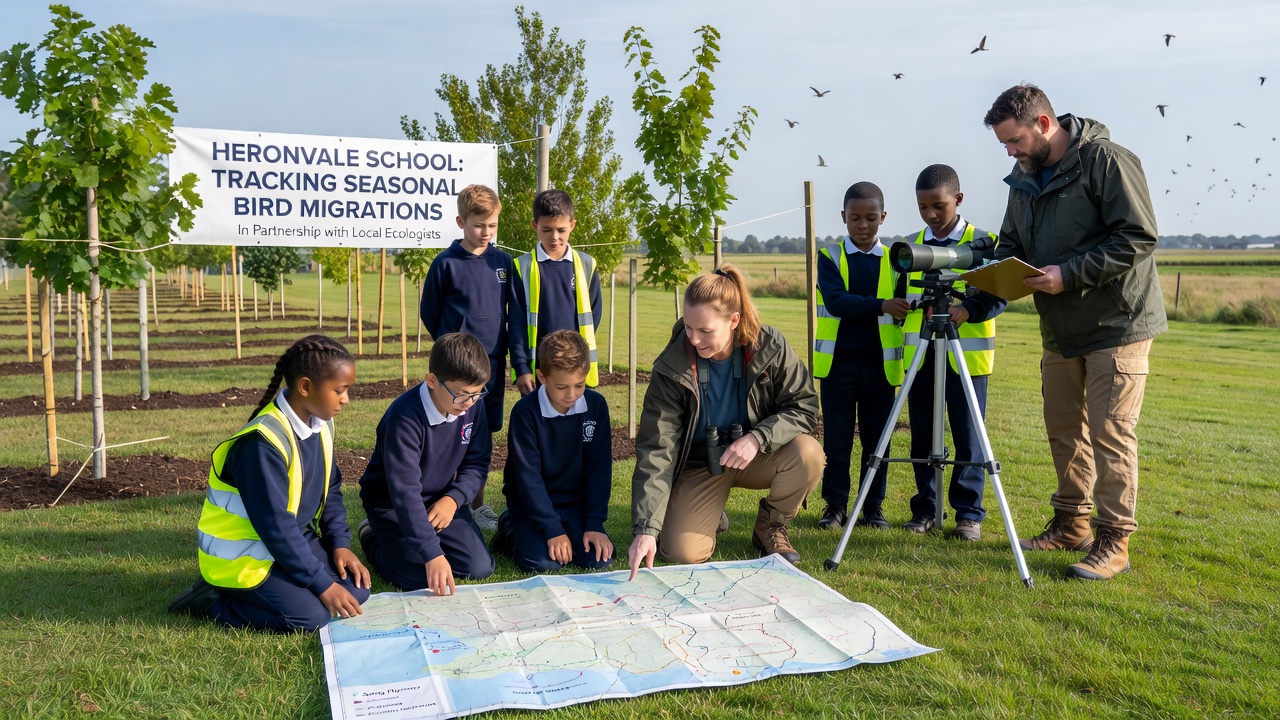
Students from Heronvale Primary School have joined forces with local ecologists to document seasonal bird movements across school fields and adjacent agricultural land, and the initiative began gaining momentum in early 2025 when new native plantings created additional habitat patches suitable for passing migrants. Data collection runs throughout the year with heightened activity during peak migration windows, including October 2026 when autumn movements typically bring increased numbers of species such as redwings and fieldfares through the valley.
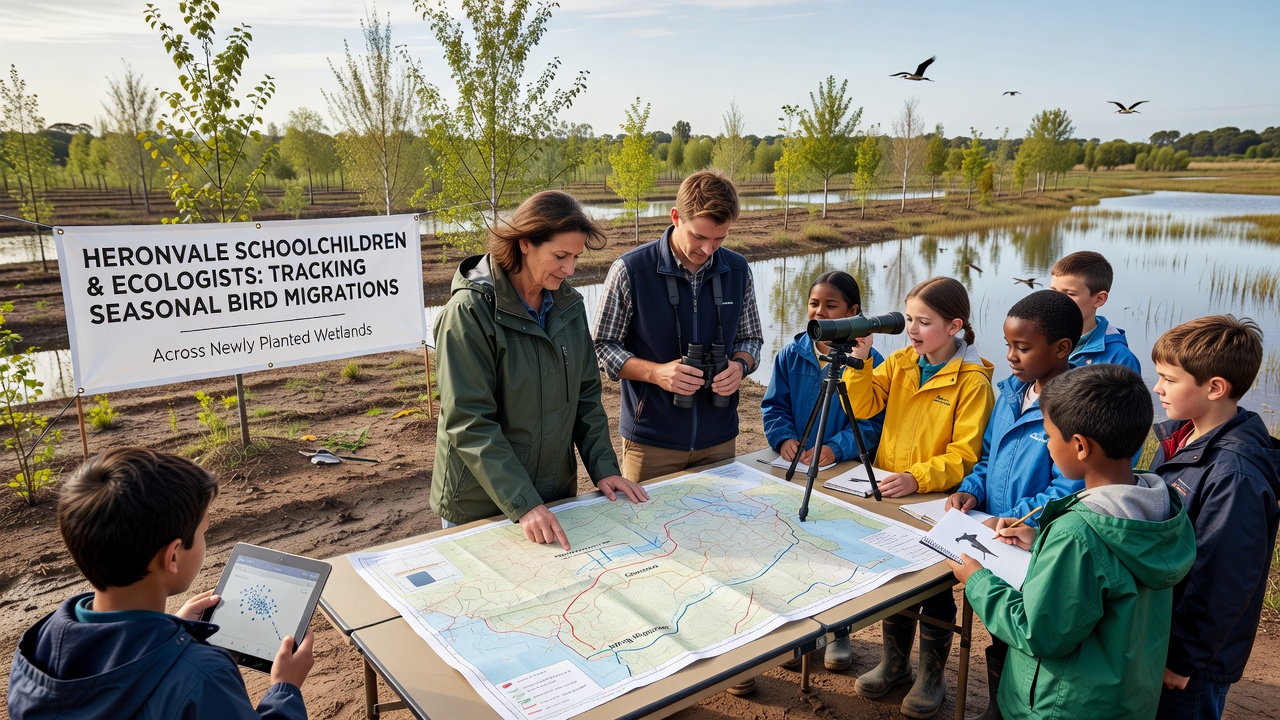
The program pairs classroom learning with hands-on fieldwork, and participants record sightings using standardized protocols developed in collaboration with regional conservation groups. Equipment includes binoculars, spotting scopes, and digital tablets loaded with identification apps, while weekly sessions take place before school hours and during designated outdoor learning periods.
Project Origins and Expansion
Local ecologists first proposed the partnership after noting consistent bird activity on school property following a 2024 landscaping project that introduced hedgerows and wildflower borders, and school administrators agreed to integrate the work into the science curriculum. Initial surveys covered roughly two hectares of grounds plus bordering fields, and numbers of recorded species rose from twelve in the first month to over forty within six months according to project logs.
Funding came through a combination of school resources and small grants from environmental trusts, and volunteers from the Heronvale Natural History Society provide ongoing training for both pupils and staff. The approach mirrors similar efforts documented by the British Trust for Ornithology, where community involvement has expanded long-term monitoring datasets across rural sites.
Methods Used for Tracking Migrations
Teams divide into groups focused on different zones, and each group logs arrival times, flock sizes, and behaviors such as feeding or resting, while weather conditions and time of day receive equal attention because they influence migration patterns. Data uploads occur daily to a shared online platform that allows ecologists to cross-reference findings with regional counts from the British Trust for Ornithology and international databases maintained by the Cornell Lab of Ornithology.
Seasonal shifts receive particular focus, and autumn passages often feature warblers and thrushes moving south while spring brings swallows and martins returning north. Participants mark individual birds when possible using non-invasive color rings supplied by licensed ringers, and recaptures or resightings contribute to broader studies on movement routes.
Species Recorded and Habitat Changes
Common sightings include goldfinches feeding on seed heads in the new plantings alongside occasional rarer visitors such as wheatears stopping on open ground during longer journeys, and the presence of these birds has prompted adjustments to mowing schedules so that certain areas remain undisturbed during key periods. Nearby fields under private ownership have also opened for limited access on agreed days, extending the survey area and revealing additional stopover sites used by lapwings and curlews.
Plant diversity on school grounds continues to increase through student-led sowing sessions, and resulting insect populations support higher numbers of insectivorous species throughout the breeding season. Records show that hedgerow growth correlates with greater use by nesting blackbirds and song thrushes, while open patches attract skylarks during spring passage.
Educational Outcomes and Community Reach
Teachers report improved engagement in science lessons when students can apply classroom concepts directly to local observations, and several older pupils have presented findings at regional youth science events. The project also connects with families through weekend open days that invite parents to join walks and contribute their own sightings.
Ecologists note that consistent participation builds skills in data handling and species identification, and some students have continued involvement after moving to secondary school by joining volunteer networks. Figures from the first full year indicate over two hundred individual observation sessions completed, generating thousands of entries that feed into valley-wide migration summaries.
Future Plans and Ongoing Monitoring
Expansion discussions include adding acoustic recording devices to capture nocturnal calls, and partnerships with nearby farms aim to create connected habitat corridors that could support larger numbers of migrants. October 2026 sessions will emphasize comparison with previous autumn data to identify any shifts linked to planting maturity or weather variations.
Regular reports appear on the school website and local noticeboards, and the collected information remains available for researchers studying broader patterns across the region. Continued involvement depends on sustained volunteer support and curriculum integration, yet current momentum suggests the program will extend well beyond the initial three-year window.
Conclusion
The Heronvale initiative demonstrates how school grounds can serve as active sites for ecological monitoring when paired with expert guidance, and results so far illustrate measurable increases in recorded bird diversity alongside measurable gains in student data literacy. Ongoing work through 2026 and beyond will continue to feed into regional datasets while providing repeated opportunities for direct observation of seasonal movements.