Hugo Reed · 5 October 2026
Heronvale Library's Rare Book Collection Draws Attention to Valley Flood Resilience Documentation
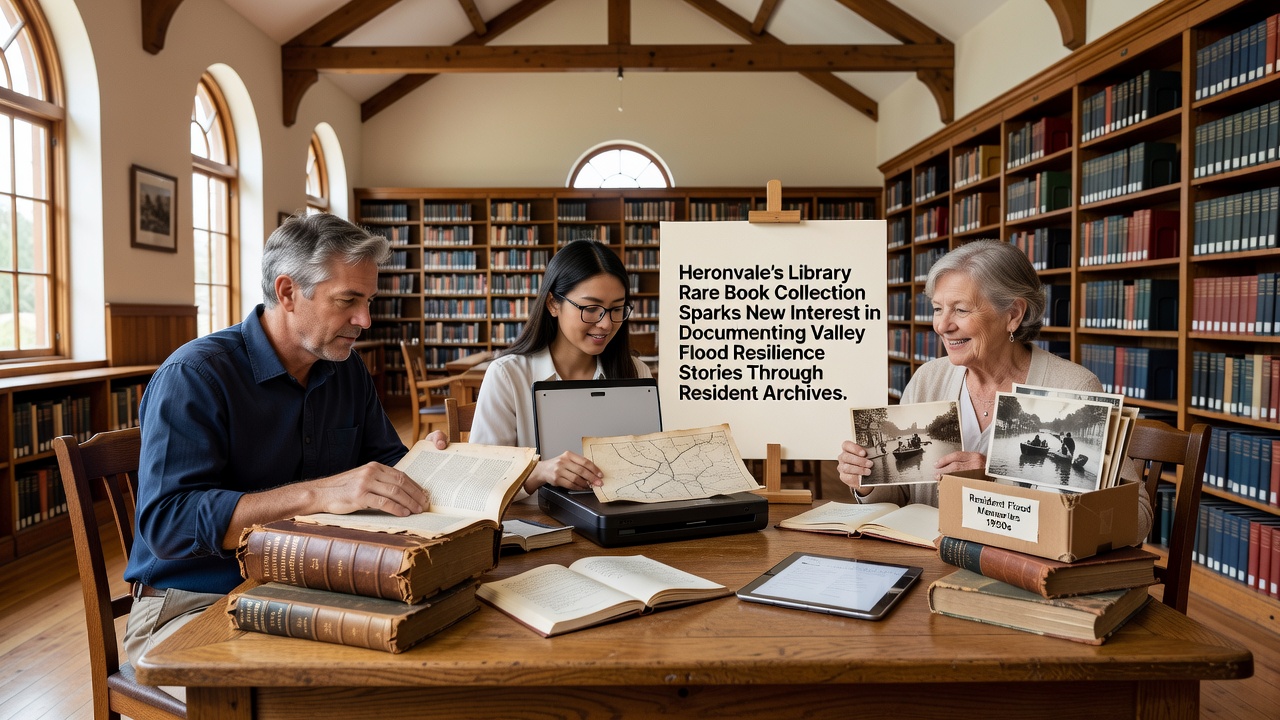
Heronvale's library has long held a collection of rare volumes that detail past flooding events across the valley, and recent activity around those materials has prompted organized efforts to gather resident archives focused on flood resilience. The books include 19th-century ledgers recording water levels, property impacts, and community responses during major inundations, alongside maps and handwritten accounts preserved from earlier decades. Library staff began cross-referencing these texts with modern records in early 2025, which highlighted gaps in local knowledge about how households adapted over generations.
Historical Records Prompt New Archival Project
Those who have examined the rare books note that several volumes contain firsthand descriptions of flood barriers built by residents in the 1800s, along with sketches of drainage systems that no longer appear on official surveys. This discovery coincided with increased queries from valley families seeking to contribute personal documents such as diaries, photographs, and insurance claims from more recent events. Project coordinators at the library established a formal intake process in spring 2026 to catalog these submissions systematically, ensuring each item receives proper attribution and storage conditions.
Data from the Environment Agency shows that the valley has experienced three significant flood episodes since 2000, with peak river flows documented at monitoring stations near the village center. Researchers cross-checked those figures against entries in the library's oldest ledgers, revealing patterns in seasonal timing that match resident recollections preserved in private letters. The comparison has encouraged more households to review their own stored materials for similar details.
Resident Contributions Expand the Collection
One family submitted a set of annotated photographs taken during the 2014 event, showing improvised sandbag placements along a tributary that runs behind their property. Another resident provided typed transcripts of interviews conducted with neighbors after the 2022 floods, complete with measurements of water depth at specific addresses. Library volunteers have scanned these items and linked them to corresponding passages in the rare books, creating a layered digital index accessible through the library's catalog system.
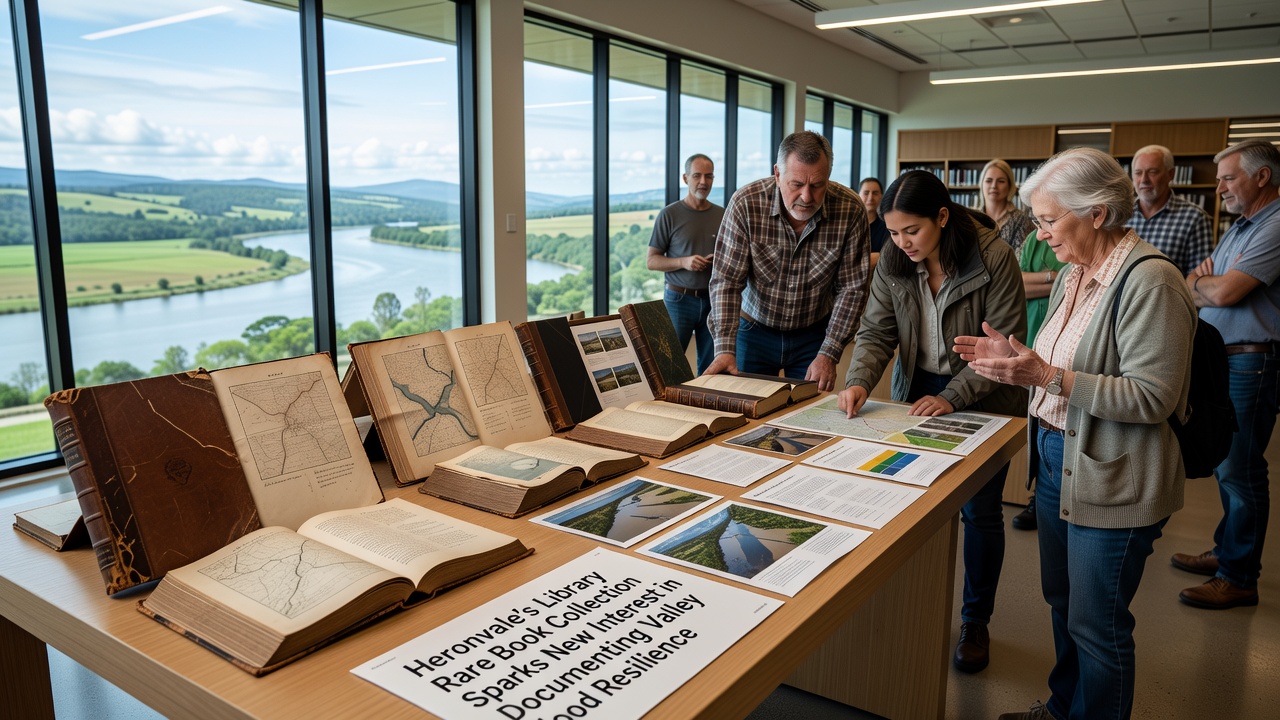
October 2026 marks the scheduled launch of a temporary exhibition that will display selected rare volumes alongside newly acquired resident materials. The display will occupy the library's main reading room for six weeks, allowing visitors to compare 19th-century maps with contemporary photographs and written accounts. Organizers have coordinated with local schools to schedule class visits during the exhibition period, integrating the materials into geography and history lessons that cover regional water management practices.
Documentation Methods Draw on Established Practices
Coordinators consulted guidelines from Natural Resources Canada on community-based flood documentation when designing the intake forms, adapting templates that emphasize consistent metadata fields for dates, locations, and types of adaptation measures. The process also incorporates elements from a University of Melbourne study on oral and written flood narratives, which stressed the value of preserving both physical artifacts and contextual descriptions from the contributors themselves. Volunteers receive training on handling fragile paper items and on obtaining signed permissions for public access.
Figures released by the UK Met Office indicate that average annual rainfall in the region has risen steadily since the 1990s, a trend that aligns with increased resident interest in documenting past coping strategies. The library's project maintains a secure storage area for original documents while producing high-resolution digital copies for broader research use. Participants retain ownership of their materials and may request returns at any time.
Conclusion
The initiative continues to accept submissions through the library's front desk and scheduled appointments. Staff track incoming items in a dedicated database that connects each new entry to relevant sections of the rare book collection. This structured approach ensures that historical records and contemporary accounts remain available for future reference by researchers, planners, and valley residents interested in flood resilience patterns.